Screen Printing 101 | Equipment | Shop Setup & Reclaiming
If you've been screen printing for a while, you already know that reclaiming screens is part of the daily grind. But here's the thing most printers don't think about until it's too late: all that ink, emulsion, and chemistry has to go somewhere.
Without proper filtration, that "somewhere" is your drain - and eventually, your local water system. Over time, this can lead to clogged plumbing, costly repair bills, and even fines from your local water department.
In this post, we're walking through why filtration matters, how a 5-stage filtration system works, and what you can do to protect your shop, your wallet, and the environment.

| WHY IT MATTERS | The Hidden Cost of Reclaiming |
Even with a solid cleaning process - carding off excess ink, removing tape, and using quality chemistry - some debris will always slip through. Tiny emulsion particles, leftover tape fragments, and ink residue can build up in your plumbing over time.
The result?
| Issue | What It Costs You |
|---|---|
| Clogged plumbing | Slow drains today, full backups tomorrow. Plumbing repairs can run thousands. |
| Environmental impact | Ink and emulsion solids entering local water systems pollute and pile up over time. |
| Fines and citations | Local water departments can issue hefty fines for non-compliant wastewater. |
| Downtime | A clogged drain or plumbing repair can shut down your reclaim station for days. |
| BEST PRACTICES | Set Yourself Up for Success |
Before any filtration system can do its job, you need to start with a clean process. Always do these steps before reclaiming:
Card Off Excess Ink
The less ink that goes down the drain, the better. Use an ink spatula to scrape as much ink off your screen as possible before reclaiming. This step alone reduces the amount of waste your filtration system has to deal with.
Remove All Tape and Adhesive
Tape pieces are one of the biggest culprits for plumbing clogs. Take the time to peel off all tape and adhesive residue before hitting the washout booth.
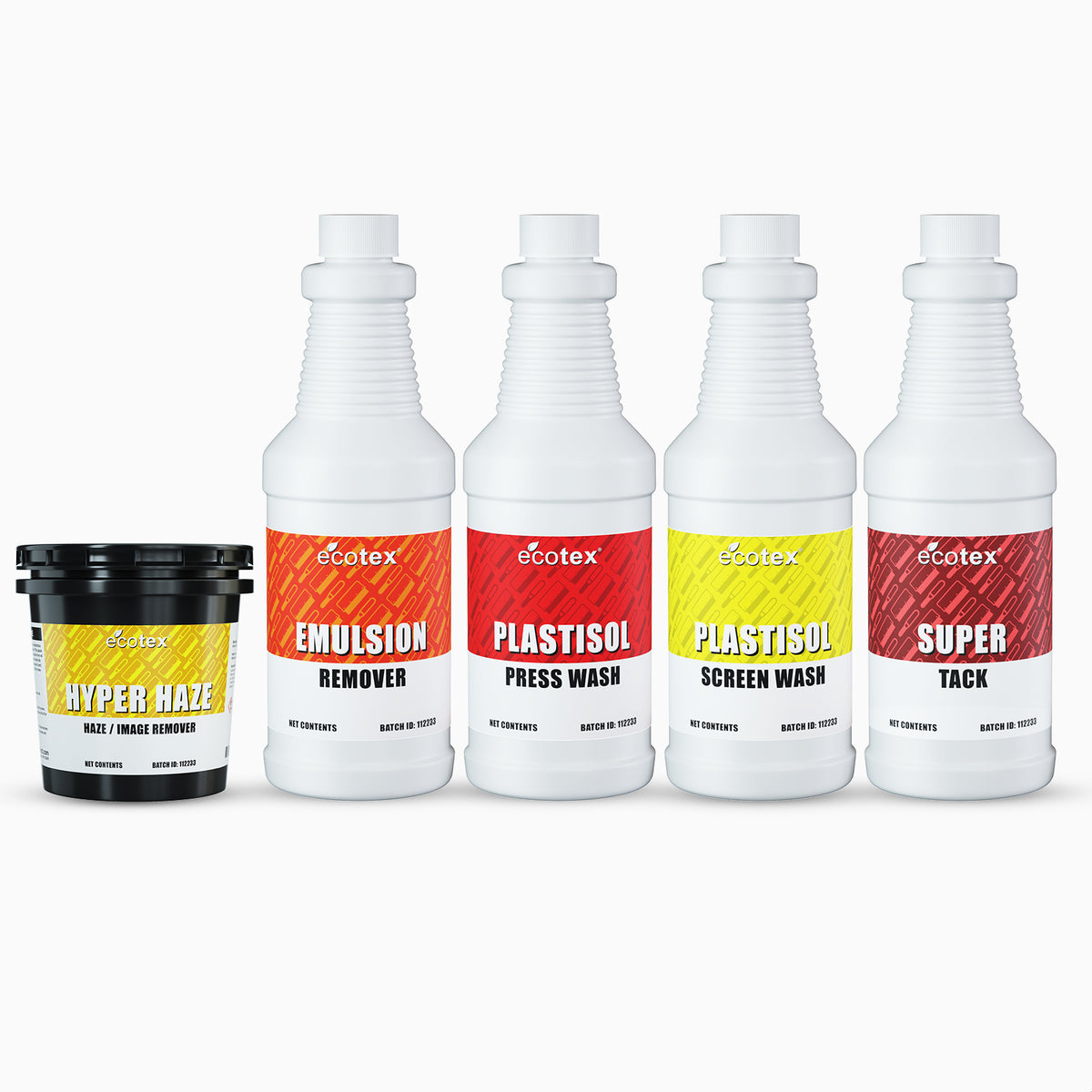
Use a Quality Emulsion Remover
A good chemistry breaks down emulsion faster, reducing the amount of solid debris going down the drain. Don't cheap out here - it makes a difference.
| 💡 Pro Tip: Even with the best cleaning process, debris will sneak through. That's why a filtration system isn't just a "nice to have" - it's an investment in the longevity of your shop. |
| HOW IT WORKS | 5-Stage Filtration Process |
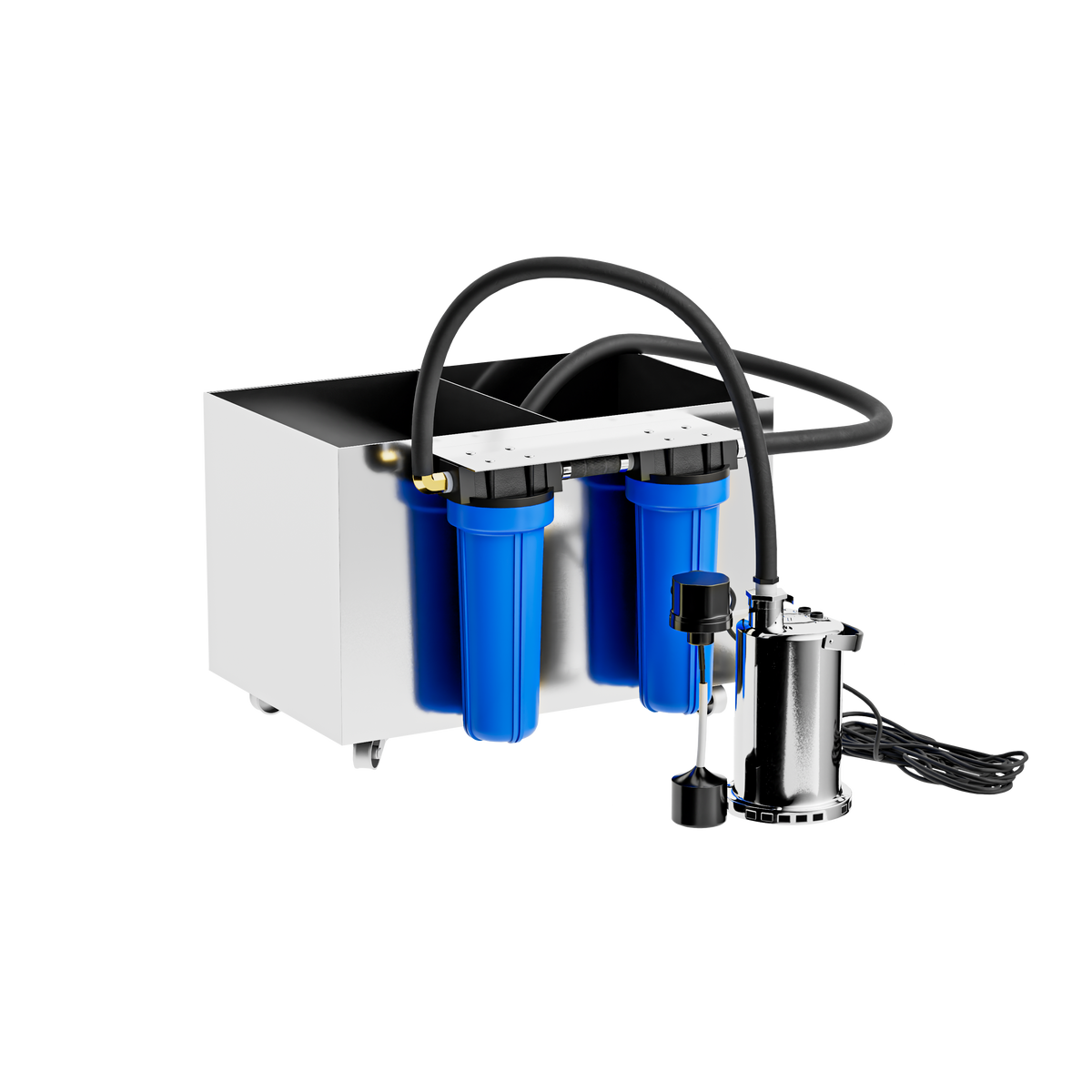
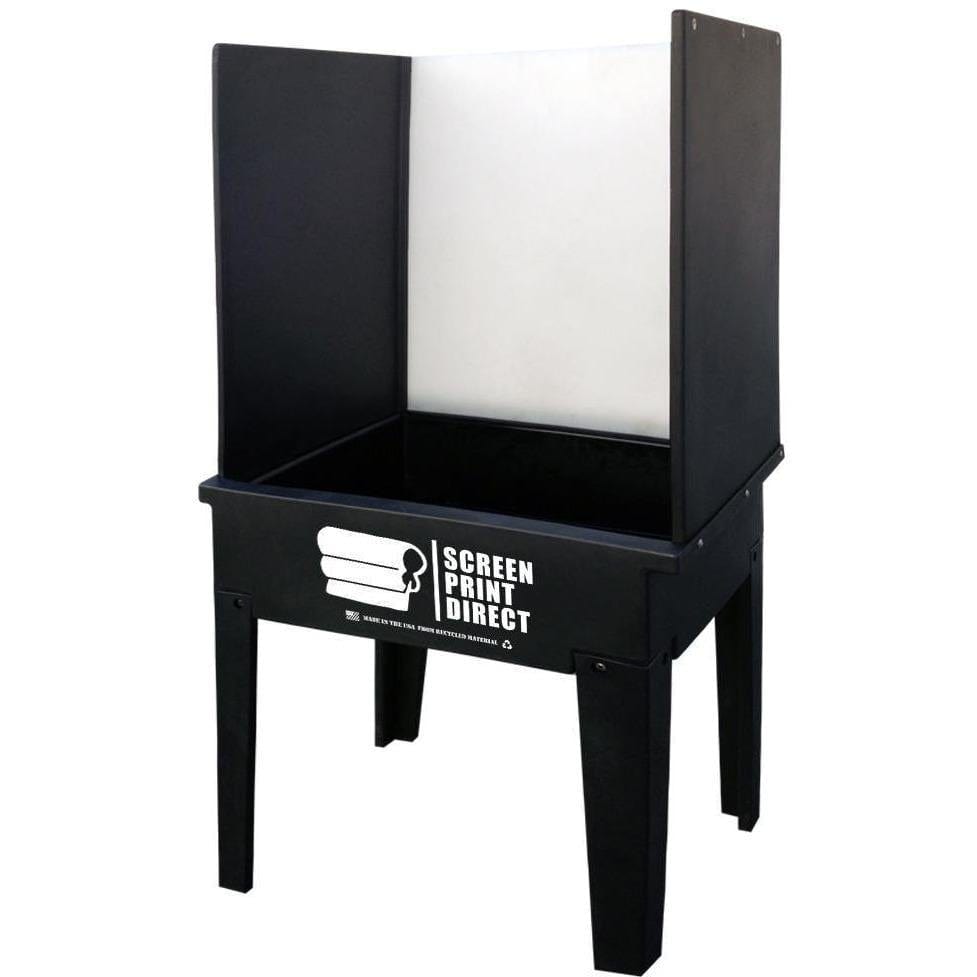
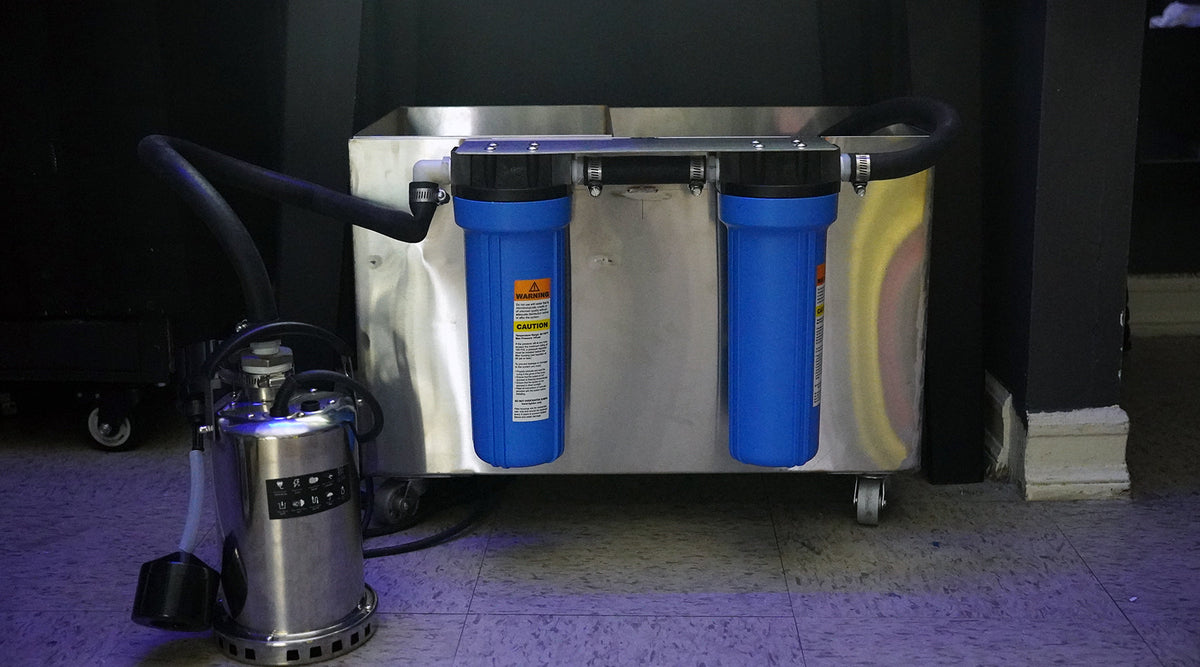
The Ecotex® Washout Booth Filtration System installs directly beneath your washout booth and captures contaminants before they enter your plumbing. Here's how the 5-stage process works: Stage 1: Coarse Filter
The first line of defense. As wastewater exits your washout booth, the coarse filter catches the largest debris - emulsion chunks, tape fragments, and other big particles.
Stage 2: Medium Filter
What gets past the coarse filter hits the medium filter, which captures smaller pieces of ink and emulsion.
Stage 3: Fine Filter
The fine filter catches even smaller particles, removing most visible debris from the water.
Stage 4: 75-Micron Filter
At this stage, the water enters a 20-gallon reservoir equipped with an industrial sump pump. The pump pushes the water through a 75-micron filter, capturing fine particulate.
Stage 5: 25-Micron Final Filter
The last stop. The water passes through a 25-micron filter, removing nearly everything that remains. What comes out the other side? Clean water that's safe to enter your drain.
| ⚠️ Watch Out: The Filtration System removes solid waste (ink, emulsion, debris) from wastewater. It does not remove dissolved chemicals or fully purify water for environmental discharge. Always dispose of filtered water in accordance with your local regulations. |
| WHAT YOU GET | Why Your Shop Needs This |
By the time wastewater exits the filtration system, it's been through 5 stages of filtration - capturing debris from large emulsion pieces all the way down to fine ink particles.
Here's what you get:
Cleaner Plumbing
No more ink and emulsion buildup in your pipes. Your drains stay clear and flowing.
Lower Repair Costs
Avoid expensive plumbing fixes down the line. The cost of a single major plumbing repair can easily exceed the cost of the filtration system itself.
Eco-Friendly Operation
Reduce solid waste entering local water systems and run a more responsible shop.
Compliance Peace of Mind
Stay within local wastewater regulations and avoid hefty fines.
Built to Last
Stainless steel construction, industrial-grade pump (36 GPM flow rate), and 20-gallon reservoir - made in the USA for shops of any size.
| FAQ | Common Questions |
Do I really need a filtration system if I use eco-friendly inks?
Yes. Even eco-friendly inks and chemistry contain solids that can build up in your plumbing over time. The filtration system captures these contaminants before they cause problems.
Will this work with my existing washout booth?
The Ecotex® Filtration System is designed to install directly beneath your washout booth. It works with most standard washout booth setups - you'll need a 1" drainpipe to connect the system.
How often do the filters need to be replaced?
It depends on your usage. High-volume shops will need to replace filter pads more frequently than smaller operations. Replacement filter pads are sold separately, with options for the complete set or individual 75-micron and 25-micron filters.
Does it require assembly?
No. The Filtration System ships ready to use - no assembly required. Just roll it under your washout booth and connect.
Can I dump the filtered water down the drain?
The system removes solid waste, but does not fully purify water. Always check and follow your local wastewater regulations for disposal.
Screen Print Direct | Screen Printing 101 Blog | screenprintdirect.com