Plastisol vs. Water-Based Inks:
Which Ink Is Right for Your Shop?
Screen Printing 101 | Inks & Materials | Beginner Friendly
When you're just getting started in screen-printing one of the first decisions you'll face is choosing your ink. And when it comes down to it, there are two major players: plastisol and water-based. Both have a place in a well-run shop, but they behave very differently on press, on the garment, and in your workflow.
In this post we're breaking both down, the pros, the cons, what to watch out for, and helping you figure out which one makes sense for the work you're doing.
Plastisol Inks - The workhorse of Screen Printing
Plastisol is the go-to ink for the majority of screen printers, and for good reason. It's reliable, forgiving, and incredibly easy to work with. Unlike water-based inks, plastisol doesn't dry on the screen, which means you can take your time on press without stressing about your mesh clogging up mid-run.
Here's how it works: plastisol ink sits on top of the fabric rather than soaking into the fibers. That gives you a bright, punchy color that really pops. The tradeoff is hand feel. You'll be able to feel the ink on the shirt, and if it's not cured properly, it will eventually crack and flake over time.
For shops just getting started, plastisol is almost always the right call. The learning curve is low, the results are consistent, and you have a lot more flexibility with your equipment and setup.

Plastisol Pros and Cons
|
PROS |
CONS |
|
• Vibrant, punchy colors that really pop |
• You can feel the ink on the garment (heavier hand feel) |
|
• Will never dry out, even left open on screen |
• Specialty inks needed for polyester and performance blends |
|
• Works with any type of emulsion |
• Requires plastisol-specific ink cleaners for washup |
|
• Very beginner-friendly with a low learning curve |
• Can crack and flake if undercured |
|
• Consistent, predictable results run after run |
• Not eco-friendly |
|
• Wide fabric compatibility including blends |
• Heavier ink deposit can limit breathability |
|
💡 Pro Tip: Always cure plastisol ink at manufacture's recommended cure temperature and dwell time. Undercuring is the number one cause of cracking and wash-out failure. When in doubt, check your cure with a temp gun or wash test. |
Water-Based Inks - The Soft Hand Alternative
Water-based inks are a totally different animal. Instead of sitting on top of the fabric, water-based inks penetrate the garment fibers and essentially become part of the shirt. The result is an incredibly soft hand feel that customers absolutely love, especially on premium blanks and fashion-forward pieces.
The most well-known type of water-based ink for dark garments is discharge ink, which uses a chemical activator to remove the dye from the fabric itself and replace it with your ink color. The finished print feels like it was dyed into the shirt rather than printed on it.
The tradeoff? Water-based inks come with more variables to manage. They can dry in your screen if left unattended, they require a water-resistant emulsion, and discharge inks need an activator to work on dark garments. They also tend to favor 100% cotton fabrics dyed with reactive dyes, so fabric selection matters more.
On the eco-friendly front, water-based inks are generally a better choice than plastisol. But do your homework since some formulations still contain pigments, binders, and thickeners.
Water-Based Pros and Cons
|
PROS |
CONS |
|
• Incredibly soft hand feel, ink becomes part of the garment |
• Can dry in screen and clog mesh if left unattended |
|
• Easy soap and water cleanup |
• Requires a water-resistant emulsion |
|
• More eco-friendly than plastisol |
• Discharge ink requires an activator (pot life up to 24 hrs once mixed) |
|
• Discharge ink eliminates the need for an underbase on dark garments |
• Longer cure time than plastisol |
|
• Print wet-on-wet, no flashing needed between colors |
• Discharge-friendly only select fabrics (100% cotton with reactive dyes) |
|
• Ideal for premium retail and fashion-forward garments |
• More variables to manage, steeper learning curve |
Side-by-Side Comparison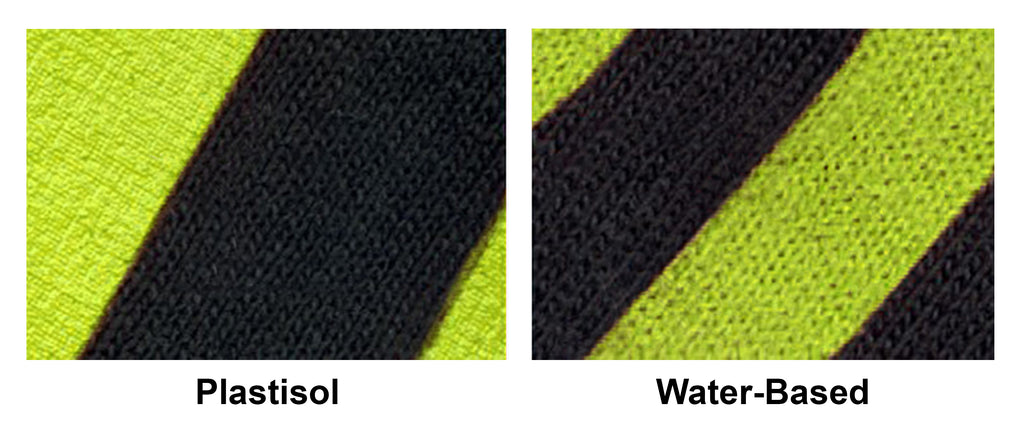
Not sure which one fits your shop? Here's a quick breakdown of how the two stack up across the things that matter most on press.
|
Category |
Plastisol |
Water-Based |
|
Hand Feel |
Heavy, sits on top of fabric |
Soft, penetrates fabric fibers |
|
Durability |
Long-lasting when cured properly |
Long-lasting, color fades gradually over time |
|
Ease of Use |
Very beginner-friendly |
Moderate learning curve |
|
Drying on Screen |
Will not dry out, stays open |
Can dry and clog mesh if left unattended |
|
Cleanup |
Requires plastisol ink cleaner |
Easy soap and water cleanup |
|
Fabric Compatibility |
Works on most fabrics; specialty inks for poly |
Best on 100% cotton; discharge needs reactive dyes |
|
Emulsion |
Any emulsion works |
Water-resistant emulsion required |
|
Eco-Friendliness |
Not eco-friendly |
More eco-friendly, though not 100% |
|
Cure Temp |
320°F standard / 270°F low temp cure |
Typically higher heat, longer dwell time |
|
Pot Life |
Indefinite (never dries out) |
If activator is added (discharge) up to 24 hours |
So Which One Should You Use?
Honestly, the answer for most shops is both, but at different times.
If you're just getting started, plastisol is your best friend. It's forgiving, reliable, and lets you focus on building your skills without adding unnecessary variables. Once you're comfortable on press and your customers start asking for that premium soft feel, that's when water-based and discharge printing becomes worth exploring.
If you're printing high-end retail, fashion blanks, or anything where that soft hand feel is a selling point, water-based and discharge inks will take your work to the next level. Just be ready to invest a little time in learning the process and testing on your specific blanks before running full production jobs.
Here's the quick version:
• Starting out or printing bold graphics on most fabrics? Go plastisol.
• Printing premium garments where soft feel matters? Explore water-based and discharge.
• Want discharge results without changing your whole ink system? Try our Plastisol Discharge Additive.
Got questions? We're always here to help. Drop a comment below or shoot us an email at info@screenprintdirect.com. And if you're stocking up on inks, emulsions, or additives, check out what we've got at Screen Print Direct, we carry everything you need to print with confidence.